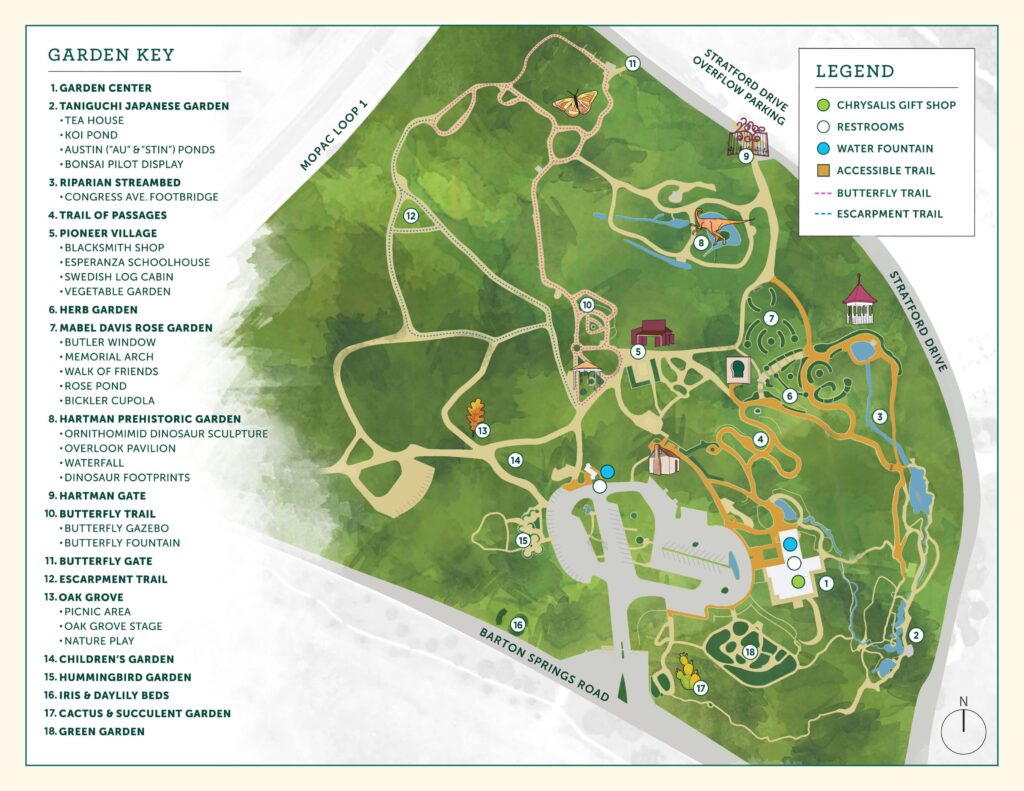
PIONEER VILLAGE
The Organic Garden
is planted with a changing display of economically important
plants from around the world grown with traditional organic
methods used by early pioneers.
The Blacksmith
Shop displays equipment needed to make and shape metal implements
hand-forged by pioneer blacksmiths. Coal was used to heat
the forge and a bellows to fan the fire red hot so metal could
be worked on the anvil. Hand tools in various sizes and a
leather apron worn for protection are also on display.
The Esperanza School
House was built in 1866 in the Spicewood Springs area and
served rural students' needs until about 1873. Dr. and Mrs.
F. E. Ingersol saved the building in 1962. With the support
of the Parks and Recreation Department and local civic groups,
it was moved to its present site and restored. Inside the
schoolhouse one can see books, desks and benches used by students
in the 1800's.
The Swedish Pioneer
Cabin was built about 1840 in Govalle by S. M. Swenson, the
first Swedish settler who came to Texas in 1838. The cabin
was the home of Swenson's uncle until after the Civil War.
Considered one of the best-preserved log cabins in the U.S.,
the cabin was moved to the Garden in 1965 by the Texas Swedish
Pioneers Association, which also collected the authentic pioneer
furnishings on view inside the structure.
The Wishing Well
was donated by Mr. And Mrs. J. E. Hill in 1965. Mr. Hill was
past President of the Garden Council and Chairman of the 1965
Flower Show.
|