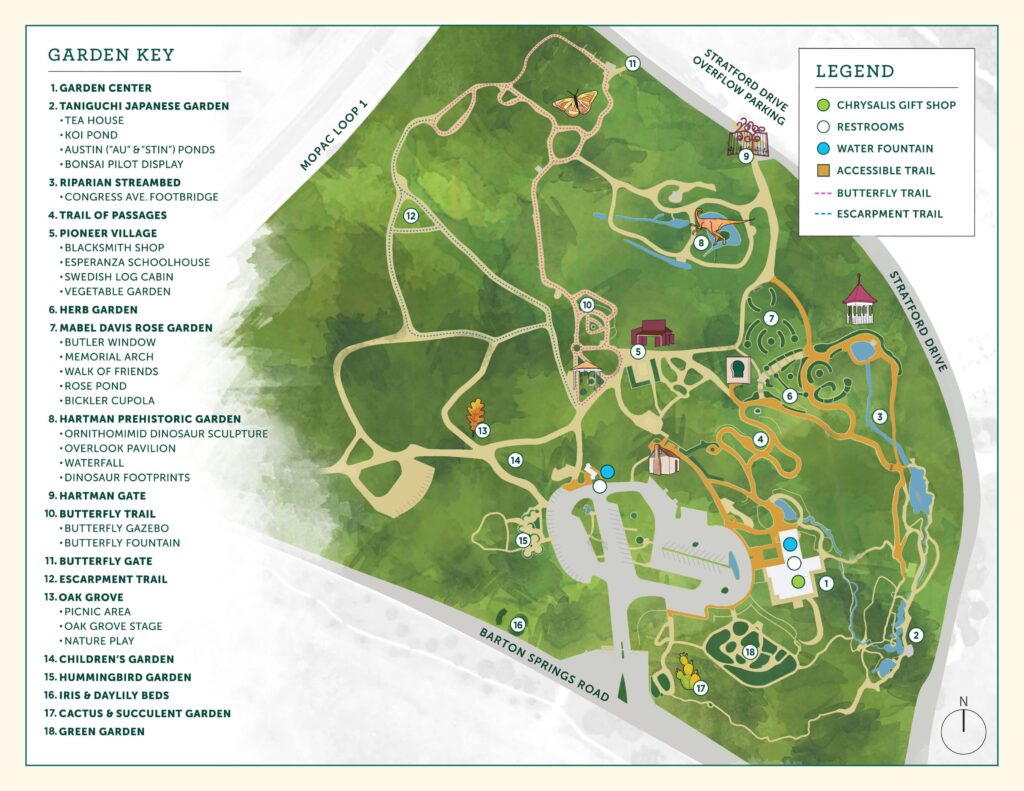
Green Garden
Facing increased
demand for water and measurable chemical impacts to our creeks
and aquifer that are caused by landscaping practices, the
City of Austin's Green Garden demonstrates attractive, yet
environmentally-sound, alternatives for Austinites. Featuring
native and adapted plants, this garden showcases designs by
nine different designers that can be adapted to the home landscape.
Homeowners can learn which plants work well together and learn
light and space requirements for each. Designs range from
colorful, seasonal gardens, to traditional, evergreen styles,
and a natural, wildlife habitat.
Major components
of a Green Garden include:
- Austin-hardy plants (natives and adapteds) that require
fewer pesticides and less water
- Appropriate turf varieties to limit water, maintenance
and fertilizer needs
- Compost, and/or Dillo Dirt, to recycle waste products
while providing nutrients
- Trees to reduce energy needs and improve air quality
- Don't bag lawn clippings to reduce waste in the landfills
and replenish nutrients to the lawn
- Reduce pavement to allow water to filter into the
yard and avoid runoff to the street
Several
interesting features can be found in the Green Garden area.
The members of Xi Zeta Chapter of Beta Sigma Phi gave the
antique iron gates marking the entrance to this garden in
memory of Dr. Dorothy Schons. The statue of Saint Francis
of Assisi is set on a pedestal of natural rock and was donated
by the Catholic Women's Study Club of America. An interesting
footnote to the choice of subject is that Franciscan monks
built a mission at Barton Springs in the 1730s but abandoned
it due to constant raiding by "hostile Indians".
The Peace Aviary features a fanciful castle birdcage in black
wrought iron forged by Louis Herrera Sr., whose son worked
on the entry gates to the gardens.
|