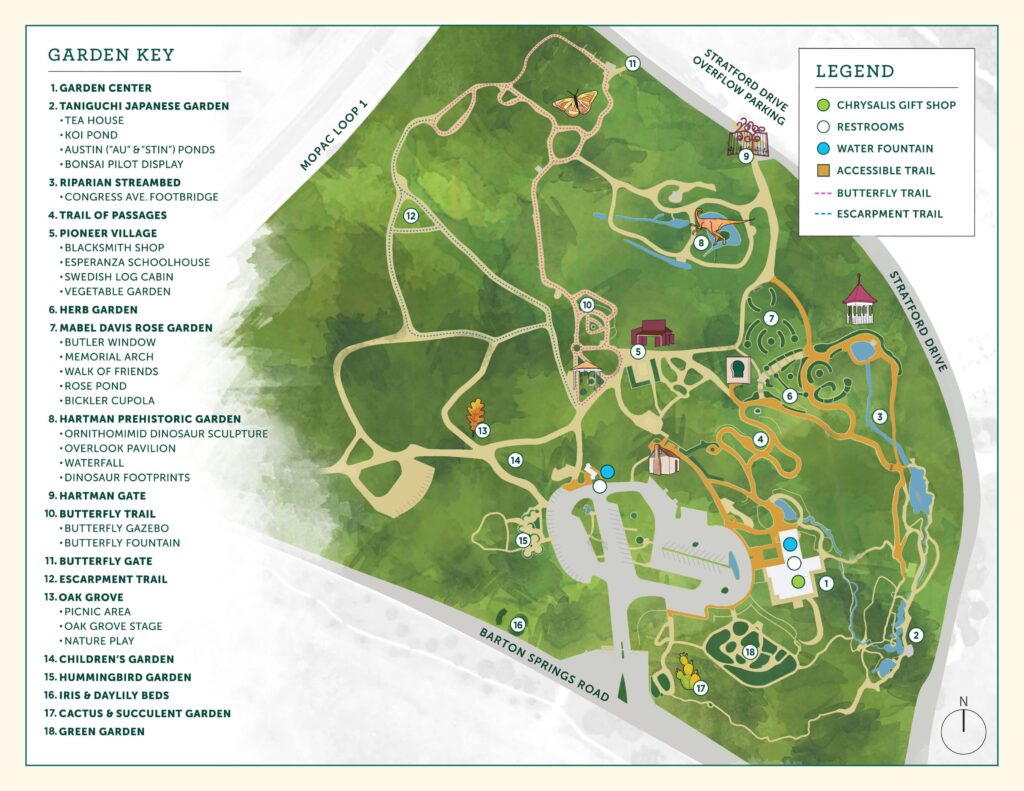
HARTMAN PREHISTORIC
GARDEN
DISCOVERY
In 1992, amateur
paleontologists discovered dinosaurs once roamed the grounds
of Zilker Botanical Garden. More than 100 tracks made by
six or seven reptiles along with the bones of an ancient
turtle were found. Location and accessibility made this
discovery a particularly significant find.
After the discovery, paleontologists studied the best methods
to preserve the tracks because they were deteriorating rapidly.
Researchers decided to map and make casts of the tracks,
then rebury the tracks to prevent further loss from exposure.
Thanks to contributions from major donors, in-kind gifts,
a major fund drive and volunteer efforts by Austin Area Garden
Council members, this two-acre site has been developed as
a Cretaceous habitat.
Plants in the garden represent the types that existed at
the time of the dinosaurs. These are the spore producing
plants (ferns, horsetails and liverworts), the gymnosperms
(cycads, conifers and ginkgos) and the first angiosperms
(magnolias and palms).
CRETACEOUS GARDEN
During the Cretaceous period (144 to 65 million years ago),
flowering plants evolved as well as a great variety of insects.
Dragonflies, butterflies and other insects co-evolved with
plants providing more effective pollination.
This garden includes examples of the more primitive angiosperm
families (magnolias, dogwoods, witch hazel, laurel, palms
and birches). These are set amidst a backdrop of plants originating
from the Jurassic period-- conifers, liverworts, mosses,
horse-tails, ferns and cycads.
An assortment of small reptiles and fish add to the prehistoric
ambiance of the Hartman Garden. The moat around Dino Island
is stocked with gar, an ancient type of fish that has survived
to this day.
ORNITHOMIMUS
The life-size
sculpture on Dino Island is an Ornithomimus (Greek for “bird-mimic”),
the dinosaur that left tracks of its three toed feet in
the gardens. The Ornithomimus is one of a group of medium-size elongated
dinosaurs that lived in North America during the late Cretaceous
period, 97 to 65 million years ago.
Scientists believe this dinosaur was fast, traveling as
much as 40 miles per hour. The Ornithomimus in motion would
have looked much like the gait or stride of an ostrich or
emu. Approximately 8 feet long, it had a larger brain (for its
size) than most dinosaurs. Ornithomimus is thought to have
lived on a diet of plants, insects, eggs and small animal
prey because of its relatively small teeth and three-fingered
forepaws.
Read more about
this unique garden in Where
the Wild Things Were, a story written by Linda
Lehmusvirta about the dinosaur garden and how it
all came together.
Just down the road
from ZBG is the Dino Pit at the Austin Nature and Science
Center. Find information on this outdoor paleontology exhibit
at http://www.dinopit.org.
|